 Official LINE

Restoring your natural, youthful look
Reduce wrinkles on the lower eyelids
Who is midface rejuvenation (fat repositioning & grafting) suitable for?
- For those concerned about sagging cheeks and prominent wrinkles on the mid-face.
- For those looking to improve mid-cheek grooves and nasolabial folds.
Midface rejuvenation (fat repositioning & grafting) explained
Midface rejuvenation (fat repositioning & grafting) is a surgical procedure designed to improve the appearance of aging from the lower eyelids to the mid-face. It addresses sagging skin, bulging fat, nasolabial folds, and mid-cheek grooves through skin excision, fat removal, and subperiosteal lifting of the mid-facial tissues.
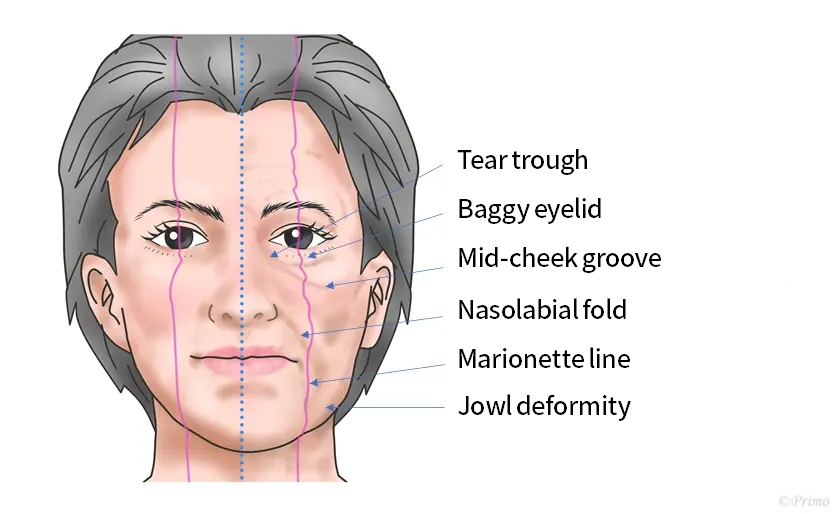
The skin on the lower eyelids is very thin and delicate, making it one of the first areas to show visible signs of aging, such as wrinkles and sagging.
Lower eyelid puffiness is often referred to as baggy eyelids. This is caused by orbital fat protruding forward due to the aging process.
Nasolabial folds and mid-cheek grooves become deeper and more prominent as a result of facial tissues loosening and losing volume over time.
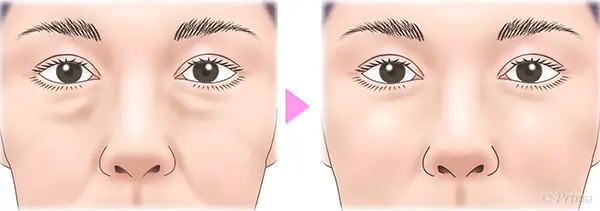
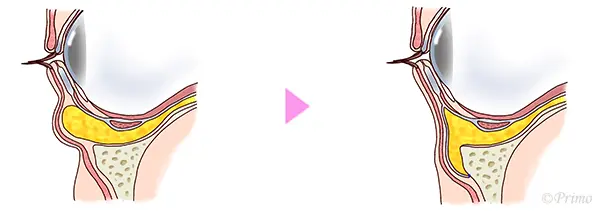
Through midface rejuvenation (fat repositioning & grafting), we reduce fine lines by excising excess skin along the lash line. At the same time, removing orbital fat helps to eliminate the appearance of baggy eyelids.
Furthermore, a subperiosteal lift is performed to elevate the mid-facial tissues, lifting the sagging areas and restoring a youthful contour to the front of the cheeks.
Features of our midface rejuvenation (fat repositioning & grafting)
- For local anesthesia, we use 34G ultra-fine needles (needle thickness 0.2mm) to minimize pain.
- Surface anesthesia and intravenous anesthesia are used for those who are afraid of even the slightest pain.
- Skin sutures can be removed early on the fourth or fifth day, because we use the buried suture method with 7-0 ultra-fine absorbable thread. Scarring will be minimal.
- Skin suturing with transparent thread is also available.
- Lifting of the muscles to prevent ectropion.
- You can apply make-up to your lower eyelids the day after your stitches are removed.
- The use of an endoscope allows for a safe and precise procedure, ensuring that nerves are protected throughout the surgery.
Surgical method
Sagging skin is removed by excising the skin at the eyelash line.
Care must be taken not to remove too much, as over-resection can lead to ectropion.
After excision of the skin, the area under the orbicularis oculi muscle is dissected to expose the orbital fat.
Furthermore, the dissection is performed beneath the orbicularis oculi muscle down to the infraorbital rim, while identifying the infraorbital nerve to ensure its preservation.
The periosteum of the infraorbital rim is elevated, and the mid-facial tissues on the front of the cheeks are dissected while carefully protecting the infraorbital nerve.
An incision is made in the distal portion of the elevated periosteum, allowing the front of the cheeks to be lifted upward.
Using the Hamra method, excess orbital fat is repurposed to fill in the mid-cheek grooves.
The orbicularis oculi muscle is pulled laterally to tighten the lower eyelid.
If there is still excess skin at this point, additional excisions are made.
In addition to careful buried sutures with absorbable thread, skin sutures are lightly stitched with ultrafine thread, so there are no visible scars.
For optimal healing, the wound is internally sutured with high-performance absorbable ultra-fine thread and externally sutured with non-absorbable ultra-fine thread.
We also offer skin suturing with ultra-fine transparent thread.
If you wish to have more firmness across the cheeks, fat injections or hyaluronic acid injections can be used to further rejuvenate the cheeks.
Endoscopic Midface Rejuvenation (Fat Repositioning & Grafting)
As we age, a loss of cheek volume combined with the loosening of facial ligaments causes wrinkles such as nasolabial folds and mid-cheek grooves to become more prominent.
Midface rejuvenation (fat repositioning & grafting) is a procedure designed to lift sagging cheeks. By using an endoscope, we can protect the infraorbital nerve and minimize the dissection area, allowing for a safer recovery with shorter downtime.
Method
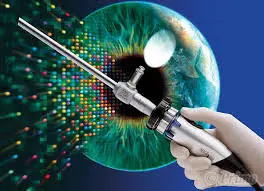
A Karl Storz Full HD endoscope is inserted through the lower eyelid incision, allowing for the subperiosteal dissection of the maxilla under direct visualization on the monitor.
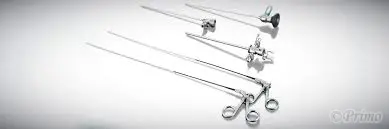
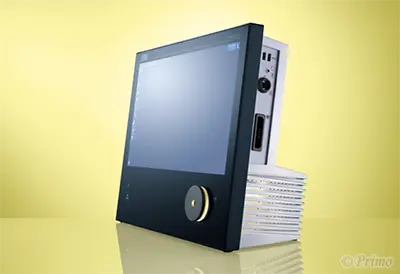
The dissection is extended over the maxilla toward the nasolabial fold area, ensuring the infraorbital nerve is identified and carefully preserved throughout the process.
By incising the maxillary periosteum near the nasolabial folds under endoscopic guidance, the tissues can be effectively and securely lifted.
Aftercare for midface rejuvenation (fat repositioning & grafting)
《After surgery》
Condition of the affected area
A scar will remain along the lower lash line.
The lower eyelash line is sutured with an ultra fine black thread.
Stitches are usually removed in 5-7 days.
Bruising may occur, and sometimes in the white part of the eye.
It will disappear in 1-2 weeks.
Swelling may cause the eyelid to slightly turn outward.
The degree varies from person to person, but it settles down in about 3-6 months.
Post-operative checkup and aftercare
You will be examined by the doctor just before you go home after surgery.
Antibiotics, painkillers (the pain is usually mild, but we prescribe them just in case) and gastric medicine will be prescribed for 3 days after surgery.
Lifestyle advice
You can wash your hair and take a shower on the same day after surgery.
Please only wash your face with water, not soap.
You can use soap or facial cleansing foam from the next day onwards.
However, please do not rub the wound.
If the thread gets stuck or it tears, it may bleed.
Please do not pick the scab or any other part of the wound, and try to rest.
Please refrain from taking a bath or doing any strenuous exercise for about a week.
Make-up can be applied on the same day after surgery except around the wound.
Please do not apply any make-up to the affected area until the stitches are removed.
When sleeping, please use cushions to elevate your upper body and head.
Please refrain from drinking alcohol and smoking for about a week.
Contact lenses can be worn after surgery if there is no discomfort.
Note that they cannot be worn for the first 2–3 hours after surgery due to the effects of anesthesia.
《Days 5-7 after surgery》【It is recommended that you visit for a checkup at this time】
Condition of the affected area
Swelling will go down in a week or two.
Initially, the scar will be red.
The redness varies from person to person, but it will subside in 1-2 months.
In rare cases, there may be a slight bump.
In rare cases, the suture thread may come out.
Bruising may occur, and sometimes in the white part of the eye.
It will disappear in 1-2 weeks.
Post-operative checkup and aftercare
You will be examined by a doctor, and your stitches will be removed.
Lifestyle advice
Eye make-up, skin lotions and creams can be applied after stitches removal.
Please avoid rubbing the eye area too much.
From the 7th day after surgery, you will be able to bathe and exercise as usual.
After removal of stitches, please keep the scar moisturized and UV protected.
Our wound cream (1,100 yen inc. tax) can be applied to make the wound less prominent.
《1-3 months after surgery》【It is recommended that you visit for a checkup at this time】
Condition of the affected area
The wound will gradually heal completely, but there will be some swelling for a while.
The redness varies from person to person, but it will subside in 1-2 months.
Post-operative checkup and aftercare
You will be examined by a doctor.
There is no post-operative procedure.
Lifestyle advice
Please continue to moisturize and UV-protect your scars.
《6 months after surgery》【It is recommended that you visit for a checkup at this time】
Condition of the affected area
The wound has almost fully healed.
Post-operative checkup and aftercare
You will be examined by a doctor.
There is no post-operative procedure.
Lifestyle advice
You can resume all of your daily activities.
FAQ
For 1-3 months after surgery, there will be some redness and stiffness. Redness can be concealed with make-up, and if it becomes persistent, we will provide appropriate treatment at the post-operative checkup (free of charge).
Make-up can be applied on the day of surgery except for the surgical site.
Stitches are usually removed 5 days after surgery.
The day after they are removed, you can apply make-up to your lower eyelids.
About 1-2 weeks, usually.
Post-operative pain is usually very mild.
We will prescribe a mild analgesic and anti-inflammatory drugs just in case.
About 2 hours and 30 minutes.
Bruising sometimes occurs.
If it appears on the skin, concealer can be used. If it appears on the sclera, it will take 1-2 weeks to clear.
We always prescribe eye drops and eye ointment for dry eyes.
Pain will be minimal because our local anesthetic contains extra agents to reduce any discomfort.
We inject the anesthesia slowly and carefully to minimize any pain during the process.
Fees
| Midface Rejuvenation (Fat Repositioning & Grafting) | Subperiosteal Lift | ¥660,000 |
|---|---|---|
| Lower Blepharoplasty with Septal Reset (Hamra technique) + Subperiosteal Lift | ¥825,000 | |
| Lower Blepharoplasty with Septal Reset (Hamra technique) + Subperiosteal Lift + Fat Injection | ¥935,000 |
All fees displayed include tax.
Risks and side effects of midface rejuvenation (fat repositioning & grafting)
Underneath is a list of things that may occur.
In order to prevent any of these symptoms from occurring, we take safety measures and perform treatment with the utmost care.
We will always improve your symptoms.
Normal post-operative symptoms
Swelling
Swelling will go down in 1-2 weeks.
Bruising
There may be bruising around the eye, and occasionally it appears in the white part of the eye.
Any bruising will disappear in a week or two.
Eyelid discomfort
Immediately after midface rejuvenation (fat repositioning & grafting), the eyelids will feel strange, but this will disappear over time.
Scar redness
It remains on the eyelash line.
You will see some redness for 1-2 months after surgery, but it will become less noticeable over time.
Perceptual abnormalities
Numbness or sensory changes may be experienced in the infraorbital nerve region, including the cheek and upper lip.
Most symptoms are temporary and will improve within a few days to a few months.
Risks and complications
Exposure of buried absorbable sutures
If this happens, we will remove them.
Swelling of the whites of the eyes
Swelling may cause the whites of the eyes to temporarily turn jelly-like, but this will disappear over time.
We prescribe eye drops and eye ointment to accelerate healing.
Ectropion
Post-operative swelling and excessive skin removal may cause eyelid ectropion.
The degree varies from person to person, but it settles down in about 3-6 months.
If there is no improvement, skin grafting may be necessary.
Double vision
This can occur when the extraocular muscles are damaged by surgery.
Dry eyes
As the eyelids become larger and the eyes open more easily, they may dry out more easily.
Epiphora
Tears may flow easily after surgery.
This can occur when the lacrimal canal is narrowed due to post-operative swelling.
It will improve as the swelling goes down.
Changes in eyelid morphology
There may be a slight tendency toward slanted eyes after surgery.
Stiffness and discomfort of the eyelids may occur.
Sagging remains
Fine lines and sagging skin will not disappear completely.
Too much skin removal increases the risk of ectropion, so the optimal amount of resection is determined according to the situation.
Eyelid surgery (blepharoplasty) list
Detailed information on each eye surgery procedure, including case photos, case progress photos, procedure duration, post-operative course, downtime, aftercare, risks, side effects, and complications.
Supervising Doctor
Under the supervision of our plastic surgeons, we operate our website in accordance with medical advertising guidelines.
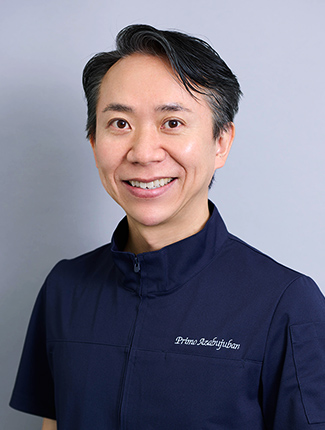
NORIHIRO OHBA M.D. Ph.D.
HEAD DIRECTOR/DIRECTOR
Qualifications and Academic Affiliations
Doctor of Medicine
Board Certified Plastic Surgeon, Japan Society of Plastic and Reconstructive Surgery
Board Certified Aesthetic Plastic Surgeon, Japanese Society of Aesthetic Plastic Surgery
Board Certified Aesthetic Plastic Surgeon, Japanese Society of Aesthetic Surgery
Anesthesiologist certified by the Ministry of Health, Labor and Welfare
Member of International Society of Aesthetic Plastic Surgery (ISAPS)
International Member of American Society of Plastic Surgeons (ASPS)
Member of Japan Society of Cranio-Maxillo Facial Surgery
Member of Japan Society of Laser Surgery and Medicine
Career
Graduated from Osaka City University Faculty of Medicine, 1996
Osaka City University Hospital Plastic and Reconstructive Surgery, 1996-1999
Osaka City University Graduate School of Medicine, 1999-2003
Osaka City University Hospital Plastic and Reconstructive Surgery, 2003-2005
Sano Memorial Hospital Plastic and Reconstructive Surgery, 2003-2005
Daito Central Hospital Plastic and Reconstructive Surgery, 2003-2005
Ritz Cosmetic Surgery Tokyo Clinic, 2005-2008
Primo Azabujuban Clinic, 2009~
Head Director, Primo Medical Corporation, 2011~
Head Director/Director, Primo Azabujuban Clinic, 2020~