
Adds volume to the glabella, creating a smooth and natural transition from the forehead to the bridge of the nose
Who is the radix augmentation suitable for?
- For those who want to improve the connection between the forehead and nose.
- For those looking to create more facial depth and a more defined appearance.
- For those wanting a natural, subtle nose.
An explanation of the radix augmentation
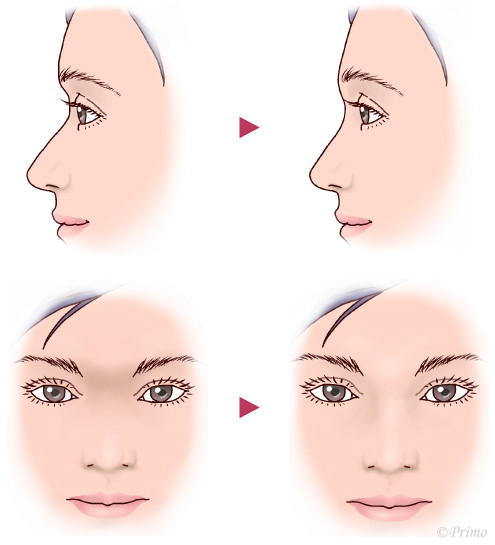
A glabellar implant is inserted to add height to the area between the eyebrows.
It creates a smooth, seamless contour from the forehead to the nose, achieving a more refined and three-dimensional facial structure.
Since augmenting only the glabella can result in an unnatural transition to the nasal bridge, we generally perform this alongside augmentation rhinoplasty. This ensures the entire nose is balanced and heightened seamlessly from the brow to the tip.
Augmentation Rhinoplasty
We use either custom-made implants or Gore-Tex materials.
Compared to silicone, Gore-Tex is softer and more flexible, allowing it to integrate naturally with the body and reduce the risk of capsule formation.
During surgery, we meticulously ensure there are no bends or folds and fix the implant with absolute precision.
The incision is made inside the nostrils, so there are no visible scars on the outside.
Hyaluronic Acid Injection
For a simpler alternative to surgery, hyaluronic acid injections offer a quick way to add height to the glabella.
While the procedure is quick with minimal downtime, the filler is gradually absorbed by the body. Therefore, periodic injections are required to maintain the desired results.
A potential disadvantage is that over-injecting hyaluronic acid can cause the area to look unnaturally wide or thick.
Features of our radix augmentation
- We use either custom-made implants or Gore-Tex implants.
- The implant does not sway because a pocket is created under the periosteum.
- Pull-out fixation is performed vertically, and horizontally, so that the implant will not bend and will be fixed in the proper position.
- Surgery is performed under intravenous anesthesia, without consciousness or pain.
- The use of an endoscope protects the supratrochlear nerve and minimizes the extent of dissection.
Surgery method
Before surgery, we use 3D simulation to evaluate the nose and facial structure.
Based on this evaluation, we select the optimal implant to achieve a well-balanced result that meets the patient’s goals.
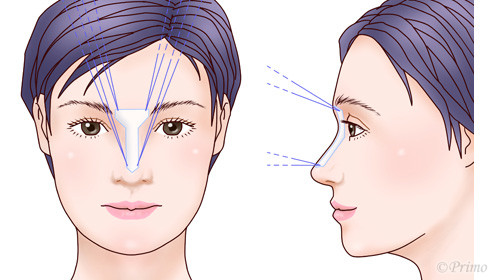
The surgery is performed under either general anesthesia or intravenous sedation.
The nasal dorsum is dissected through a nasal cavity incision, creating an dissected space under the periosteum from the nasal bone area.
Beyond the nasal bone, the necessary and sufficient amount of under the frontal subperiosteum is dissected to create a pocket.
A thread is passed through the area between the eyebrows to carefully guide the custom-shaped Gore-Tex implant into place, ensuring it is inserted without any folding or bending.
Pullout fixation is performed during insertion to guide and fix the implant in the optimal position.
Endoscopic radix augmentation
Surgery method
The nasal dorsum is approached through an open or closed approach, and under the subperiosteum of the nasal and frontal bones is dissected to create a pocket.
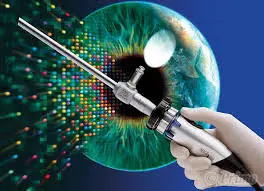
At this time, a KARL STORZ full HD endoscope is inserted to dissect under the frontal subperiosteum while viewing the monitor.
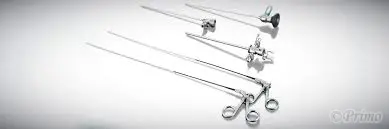
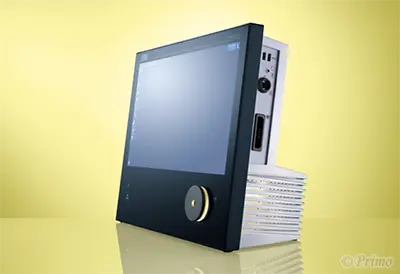
The area of dissection will be minimized based on the size of the implant.
After implant insertion, check endoscopically to ensure that the implant is not bent.
Dissect over the bone while preserving the supratrochlear nerve.
Custom-made special order implant
At our clinic, we use 3D simulation images as much as possible during nasal consultations.
The images provide information on the desired morphology and quantitatively the amount of change from before the surgery.
When creating a custom-made special order implant, a CT scan is taken in advance, and a model of your actual condition is created from the data, after which a mold of the implant is made using resin and other materials to determine the desired amount of change.
The silicone implant will be made from the mold.
The custom-made, special-order implant created fit your own bone and do not shift easily from side to side or up and down, and the edges of the implant transition smoothly to the bone, so the implant’s contours are not noticeable and their natural shape can be maintained permanently.
Of course, it is relatively easy to fine-tune the implant according to the desired changes.
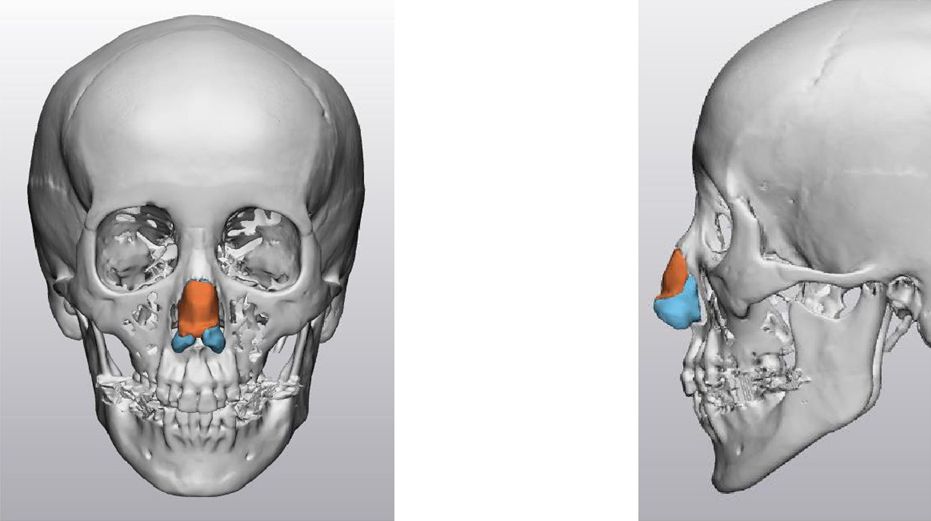
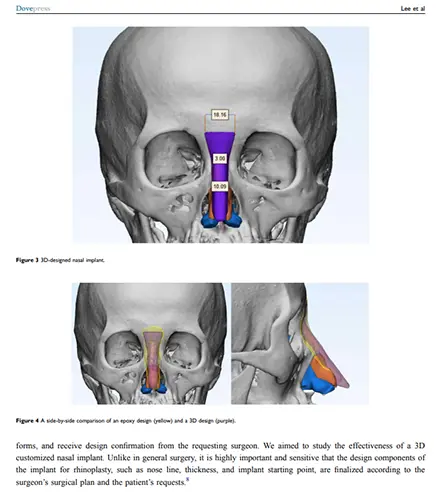
The data obtained from the CT is used to create a model of the actual situation.
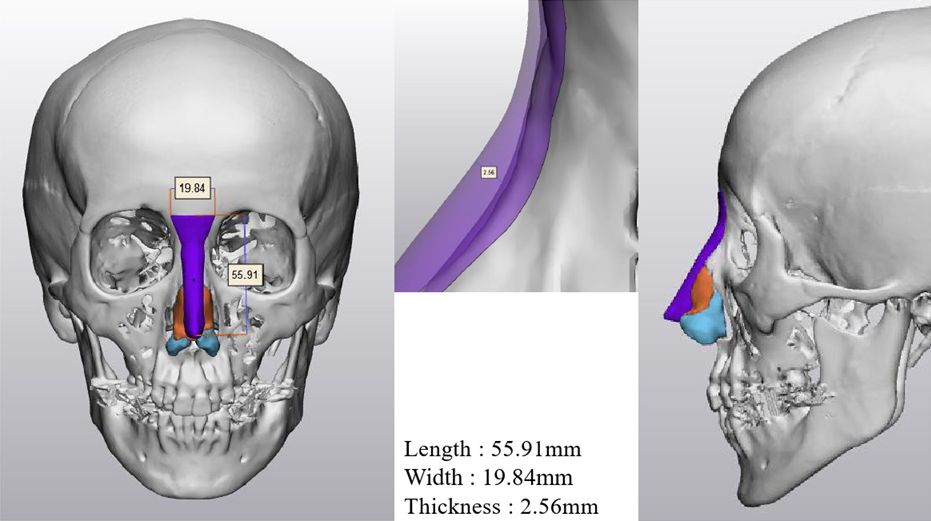
The silicone implant is designed to achieve the desired shape.
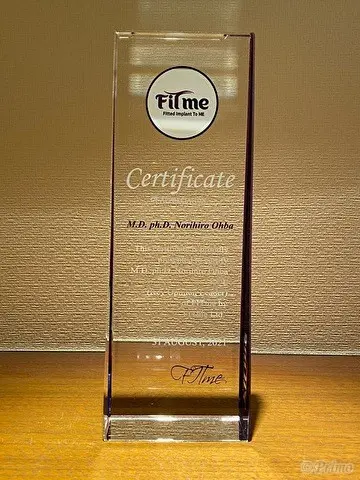
The manufacturer of custom-made silicone implant commended our clinic for its safe and effective use in many cases and recognized us as a FITme Key Doctor.
Revision of radix augmentation
- For those with crooked implant.
- For those whose implant is to high.
- For those who do not like the shape of implant.
The radix augmentation is effective in cases where the beginning of the implant placed at another clinic is easily seen, and where the implant should be placed between the eyebrows to make it look natural.
Usually, Gore-Tex implants are used, but custom-made implants made of silicone are also available.
We will replace implants that have been placed at other clinics and are crooked, too high, or unnatural.
Videos of radix augmentation
References and articles on glabellar augmentation rhinoplasty
Preventing Elevated Radix Deformity in Asian Rhinoplasty with a Chimeric Dorsal-Glabellar Construct.
Zelken JA, Hong JP, Broyles JM, Hsiao YC.Aesthet Surg J. 2016 Mar;36(3):287-96. doi: 10.1093/asj/sjv218.PMID: 26879296
Silicone-Polytetrafluoroethylene Composite Implants for Asian Rhinoplasty.
Zelken JA, Hong JP, Chang CS, Hsiao YC.Ann Plast Surg. 2017 Feb;78(2):131-137. doi: 10.1097/SAP.0000000000000759.PMID: 26999716
The Relationship Between Inter-canthal Distance and Implant Height in Asian Rhinoplasty.
Huang CJ, Yen CI, Chang CS, Chen HC, Hsiao YC.Aesthetic Plast Surg. 2022 Aug;46(4):1809-1815. doi: 10.1007/s00266-022-02864-0. Epub 2022 Apr 21.PMID: 35449422
Co-authored papers by chairperson norihiro ohba
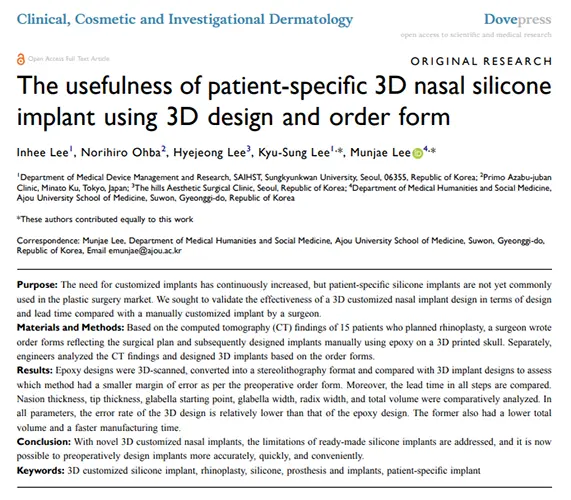
The usefulness of patient-specific 3D nasal silicone implant using 3D design and order form
Lee I, Ohba N, Lee H, Lee KS, Lee M 2 February 2022 Volume 2022:15 Pages 177—184
Duration, downtime and aftercare of glabellar augmentation rhinoplasty
《After surgery》
Condition of the affected area
The entire nose is immobilized in a cast to reshape the nose and prevent swelling and internal bleeding.
It is usually immobilized for 5 days and is carefully removed during the procedure; do not remove it yourself.
If they are removed, the risk of prolonged swelling, nasal tip reshaping, or curvature goes up a bit.
We may insert a tube to drain blood that has accumulated in the nasal cavity.
It is important to minimize swelling and internal bleeding by draining accumulated and unwanted blood and tissue fluid.
Please do not pull it out or remove it by yourself.
It is usually removed on the second or third post-operative day.
The nasal cavity is sutured with blue thread.
Stitches are usually removed on the seventh day.
The anesthesia may cause a sore throat.
Usually improves in a few days.
Nasal plug (cotton ball) is used.
There may be significant swelling around the eyes, but it will improve within a few days.
Post-operative checkup and aftercare
You will be examined by the doctor after surgery just before you go home.
We will replace it with a new drain tube just before you return home.
And check the condition of the cast.
Antibiotics, painkillers (the pain is usually mild, but we prescribe them just in case), and gastric medicine will be prescribed for 4 days after surgery.
Lifestyle advice
Please be careful not to get your face wet until the cast is removed.
You can shower only from the neck down, or from the chest down if a drain is attached.
Please refrain from bathing for a week.
The face should be wiped only.
The pain is not so severe and can be adequately controlled with ordinary oral analgesics.
Nosebleeds or nasal discharge with blood may occur.
When doing so, do not blow your nose or stuff tissues, but wipe gently.
When sleeping, please use cushions to elevate your upper body.
Sleeping on your stomach or side is prohibited as it causes stress on the nose.
After surgery, nasal congestion may occur due to swelling.
The original nasal septum cartilage is often not symmetrical and slightly tilted, so one side of the nose is more easily congested than the other.
Please refrain from drinking alcohol and smoking for about a week.
《Days 1-3 after surgery》【Please book an appointment for intravenous infusion】
Condition of the affected area
The nose wound is in a cast.
This is the peak time for swelling.
It often swells up to the eyes.
The swelling will subside to some extent in 7 to 10 days after surgery.
If the surgery extends to the nasal root or between the eyebrows, swelling and internal bleeding may also occur around the eyes and cheeks.
Post-operative checkup and aftercare
We will check the condition of the drain the day after surgery and, if necessary, after the second day.
The drain will be removed when the amount of drainage is reduced.
Intravenous antibiotics will be administered the day after surgery and on the second day.
We will check the cast and the condition of the wound.
Continue to take the oral medication prescribed after surgery.
Please inform us if you have any symptoms that may lead you to suspect side effects.
Lifestyle advice
You may shower only from the neck down, but please refrain from bathing for a week.
Please be careful not to get the cast wet when showering.
Nosebleeds or nasal discharge with blood may occur.
When doing so, do not blow your nose or stuff tissues, but wipe gently.
Please refrain from blowing your nose for a month after the surgery.
Please refrain from sleeping on your stomach or side and from pressing down hard on your nose for the 3 months after surgery.
《Days 5 after surgery》【Please book an appointment for cast removal】
Condition of the affected area
The needle hole of the pull-out fixation will be red for several days.
This is the period when the post-operative swelling causes the nasal bridge to look thicker, the tip of the nose to look rounded, and other unnatural features.
With time, the swelling will surely decrease and improve.
There may be bruising around the nose.
The bruising will usually disappear in 1-2 weeks.
Temporary sensory loss may occur at the tip of the nose and other areas.
It will improve over time.
Post-operative checkup and aftercare
There will be a medical checkup by a doctor.
The cast protecting the nose is removed and the pull-out fixation threads that hold the implant in place are removed.
Lifestyle advice
From the 5th day after surgery, you will be able to wash your hair and face as usual.
Post-operative rest is required.
Please refrain from strenuous exercise for 1-2 months.
Make-up can be applied to the wound from the next day (6th day after surgery).
Please refrain from wearing eyeglasses and others whenever possible.
Do not force the scab off.
Please wipe off nosebleeds and runny nose by pressing down lightly, and do not use cotton swabs.
Please refrain from blowing your nose for a month after the surgery.
《Days 7 after surgery》【Please book an appointment for stitches removal】
Condition of the affected area
This is the period when the post-operative swelling causes the nasal bridge to look thicker, the tip of the nose to look rounded, and other unnatural features.
With time, the swelling will surely decrease and improve.
There may be bruising around the nose.
The bruising will usually disappear in 1-2 weeks.
Post-operative checkup and aftercare
Stitches will be removed from your nasal cavity.
Lifestyle advice
From the 7th day after surgery, you can bathe as usual.
Nose cleaning, sniffing, etc. should not be done for a month after the surgery.
Please refrain from touching your nose and sleeping on your stomach or side for 3 months after surgery, as it puts stress on the nose.
Please refrain from wearing eyeglasses and others whenever possible.
《2 weeks after surgery》【It is recommended that you visit for a checkup】
Condition of the affected area
Swelling and internal bleeding will settle down considerably.
Post-operative checkup and aftercare
You will be examined by a doctor.
There is no post-operative medical procedure.
Lifestyle advice
Nose sniffing, etc. should not be done for a month after the surgery.
Please refrain from touching your nose and sleeping on your stomach or side for 3 months after surgery, as it puts stress on the nose.
Please refrain from wearing eyeglasses and others whenever possible.
《1 – 3 months after surgery》【It is recommended that you visit for a checkup】
Condition of the affected area
The wound will gradually heal completely, but there will be some swelling for a while.
Swelling between your eyebrows may be slightly bothersome, but will gradually subside.
Post-operative checkup and aftercare
You will be examined by a doctor.
There is no post-operative medical procedure.
Lifestyle advice
After a month post-operatively, you can blow your nose and clean your nose as usual.
Please refrain from touching your nose and sleeping on your stomach or side for 3 months after surgery, as it puts stress on the nose.
Please refrain from wearing eyeglasses and others whenever possible.
《6 months after surgery》【It is recommended that you visit for a checkup】
Condition of the affected area
The wound has almost fully healed.
Your nose will gradually become softer and softer.
Nasal congestion will also improve.
Post-operative checkup and aftercare
You will be examined by a doctor.
There is no post-operative medical procedure.
Lifestyle advice
You can resume all of your daily activities, but just to be safe, protect the nose from bumping or crushing.
FAQ
Answers to questions about radix augmentation.
Click on each question to see the answer.
It settles down in about a week after surgery.
When pull-out fixation is used to hold the implant straight, it is usually taped for 3 to 5 days.
Brown tape is applied, but make-up may go on top of it.
If pull-out fixation is not used, make-up can be applied immediately after surgery.
Implant can be identified by x-ray, CT, or MRI.
The implant used in our clinic are made of Gore-Tex.
It has long been used in cardiovascular surgery and neurosurgery, and the material itself is known to cause no harm to the human body.
In addition, implants made of Gore-Tex do not form a capsule around the implants, so there is no long-term deformation due to capsular contracture.
Since we insert and fix the implant under the periosteum of the nasal and frontal bone, the implant will not move or shift once it is settled after surgery.
If you are unhappy with the shape, too high or too low, the implant moves to the touch, or is crooked, or if you are dissatisfied with previous augmentation rhinoplasty, replacement of the implant is an improvement.
Surgery is performed through the nostrils.
Shapes are custom-made and processed according to your requests.
If the implant moves, it can be reinserted under the periosteum of the nasal bone to prevent movement.
If it is bent, it can be straightened by tight pull-out fixation.
Our nasal surgery is basically performed under intravenous anesthesia, so you will not feel any pain.
If surgery under local anesthesia is desired, block anesthesia is used in combination with anesthesia to minimize the pain of administering anesthesia.
Fees
| Radix Augmentation | ¥330,000 |
All fees displayed include tax.
Normal post-operative symptoms, downtime, risks and complications
Underneath is a list of things that may occur.
In order to prevent any of these symptoms from occurring, we take safety measures and perform treatment with the utmost care.
We will always improve your symptoms.
Normal post-operative symptoms and downtime
Swelling
Swelling will go down in 7 – 10 days after surgery.
Things will completely settle down in about 6 months.
Bruising around the eye.
There may be bruising around the nose.
It sometimes occurs, but it will disappear in a week or two.
Discomfort after surgery
Dull pain and discomfort may occur after surgery.
It often disappears within a few days.
Placement of a drain
A drain may be placed in the nasal cavity to prevent blood from pooling under the skin.
If a drain is used, a clinic visit may be required the next day or even the second day.
Dull sensation at the tip of the nose
Postoperatively, there may be a dulling of sensation at the tip of the nose, but this is often temporary.
It will improve over time.
Nosebleed
Nasal bleeding may occur after surgery.
Do not put fingers or other objects in the nostrils.
Scar
The surgery is performed through an open approach, which leaves a scar on columella.
There is redness of the scar for a few months, followed by a light brown to white scar over time.
Over a period of 3-6 months, the scars become less noticeable.
Risks and complications
Post-operative nasal tilt
The risk is increased by forcing the nose higher with poor skin stretching.
If necessary, revision surgery will be performed to correct the problem.
In some cases, the height of the nose must be lowered.
Wobble of implant
Although implant are usually placed under the periosteum to prevent movement, there may be cases of movement in case of exchange or in case of post-operative problems.
If necessary, revision surgery will be performed to correct the problem.
Nasal congestion
Nasal congestion occurs after surgery.
If nasal congestion does not improve, surgery may be required to improve it.
Infection
Although rare, there is a risk of infection with any surgery.
If infection occurs, it may be necessary to treat it with intravenous antibiotics, cleaning procedures, and in some cases removal of foreign bodies.
Reoperation is usually performed after 6-month interval when the condition has improved.
Inability to raise the nasal apex
The insertion of the implant makes the nose stiffer than the original nose and makes it difficult to elevate the nasal apex.
Scars are noticeable
If an open approach is used, a scar is left on the nasal column.
The needle hole in the pull-out fixation will be red for several days.
In extremely rare cases, scars may be noticeable.
The wound is treated with creams, injections, and oral medications that improve wound healing.
If necessary, resection and re-stitching will be used to improve the situation.
In rare cases, a bump may remain.
Too high / low nose
If necessary, revision surgery is performed to adjust the height.
Rhinoplasty list
Detailed information on each rhinoplasty procedure, including case photos, case progress photos, procedure duration, post-operative course, downtime, aftercare, risks and complications.
Supervising Doctor
Under the supervision of our plastic surgeons, we operate our website in accordance with medical advertising guidelines.
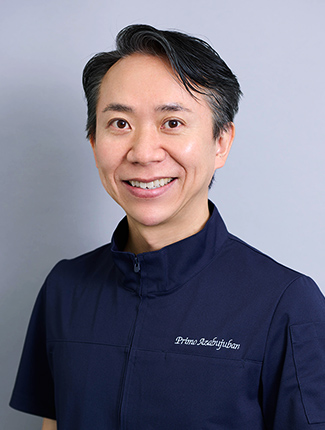
NORIHIRO OHBA M.D. Ph.D.
HEAD DIRECTOR/DIRECTOR
Qualifications and Academic Affiliations
Doctor of Medicine
Board Certified Plastic Surgeon, Japan Society of Plastic and Reconstructive Surgery
Board Certified Aesthetic Plastic Surgeon, Japanese Society of Aesthetic Plastic Surgery
Board Certified Aesthetic Plastic Surgeon, Japanese Society of Aesthetic Surgery
Anesthesiologist certified by the Ministry of Health, Labor and Welfare
Member of International Society of Aesthetic Plastic Surgery (ISAPS)
International Member of American Society of Plastic Surgeons (ASPS)
Member of Japan Society of Cranio-Maxillo Facial Surgery
Member of Japan Society of Laser Surgery and Medicine
Career
Graduated from Osaka City University Faculty of Medicine, 1996
Osaka City University Hospital Plastic and Reconstructive Surgery, 1996-1999
Osaka City University Graduate School of Medicine, 1999-2003
Osaka City University Hospital Plastic and Reconstructive Surgery, 2003-2005
Sano Memorial Hospital Plastic and Reconstructive Surgery, 2003-2005
Daito Central Hospital Plastic and Reconstructive Surgery, 2003-2005
Ritz Cosmetic Surgery Tokyo Clinic, 2005-2008
Primo Azabujuban Clinic, 2009~
Head Director, Primo Medical Corporation, 2011~
Head Director/Director, Primo Azabujuban Clinic, 2020~
